Old Friends

Each time a new novel hits the bookshelves, there’s a good chance that the author will already be deeply immersed in their next book, it has certainly been the case with me. It’s sad but true that the characters I’m about to introduce to readers when a new book is released will already be getting pushed to the back of my mind while my fickle heart develops new relationships with a new set of characters. Slowly but surely, the intricate details of the lives I have spent months creating will begin to fade and some of the minor characters will be forgotten completely.

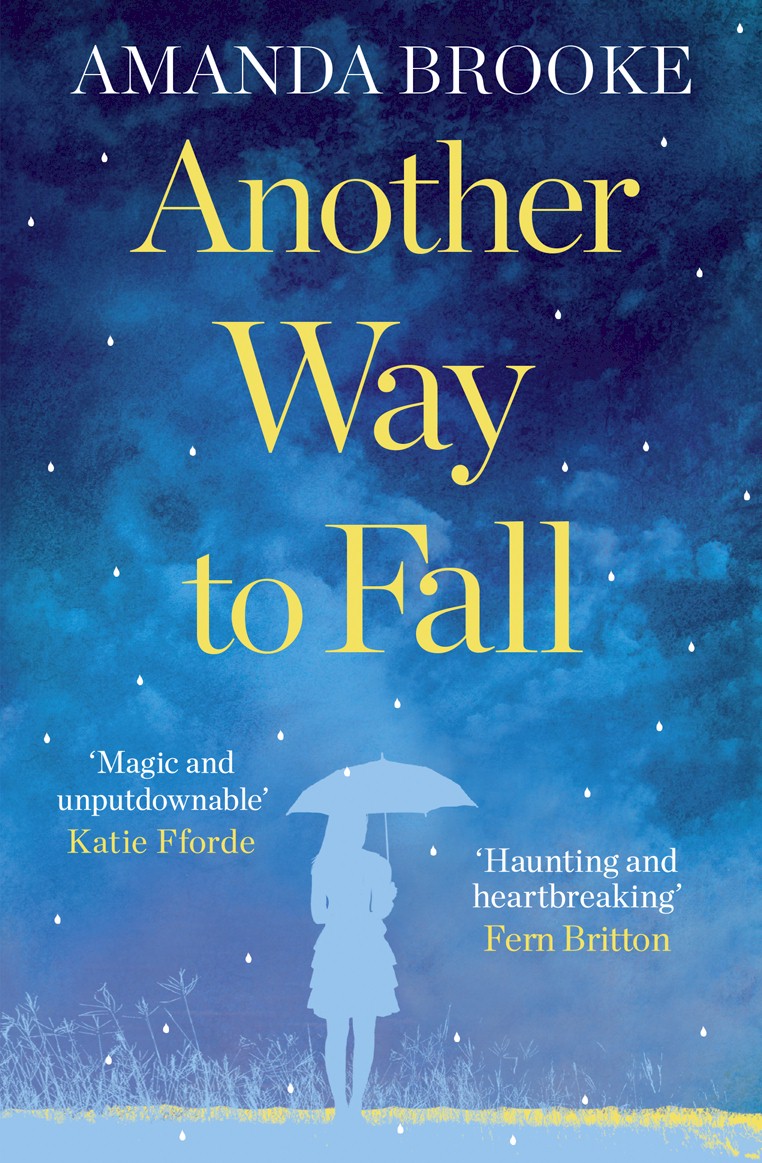
It’s only when I think back to those earlier novels that I realise how much I miss those earlier characters as if they were old friends. Another Way to Fall was my second novel and it’s currently on special offer as part of Kindle’s Twelve Days of Christmas and the promotion has got me thinking about how much that story means to me. Since writing about Emma and Ben, I’ve completed two novellas and two more novels (the latest one, The Missing Husband is due for publication in July 2015) so I suppose it’s not surprising that I haven’t thought about them for a while.

I don’t think I could ever completely forget them, and I can still picture some of the scenes I created in my mind as if it were only yesterday. One particular scene that springs easily to mind is Christmas Day in the Traveller’s Rest when Emma and her family shared presents around the table, including the framed photograph that Ben took of Emma in the museum. That photograph never existed but I know it so well that it might as well be amongst the photos hanging on my wall.

Out of curiosity, I’ve checked back on some of my older posts and I can’t believe that it was only two years ago that I was going through the page proofs of Another Way to Fall. As you’ll see if you read the post [click here], I really did love that story and there was one character in particular who will always have a special place in my heart – the Shopkeeper. So if you have read the book or download it as part of the latest Kindle deal, I’d love to know what you thought of it and if any of the characters and scenes made an impression on you.

Inspiring Writers

I was honoured to be invited along to the Sheffield Royal Society for the Blind as part of the Off The Shelf Festival recently and since it was my first ever trip to Sheffield, I didn’t quite know what to expect.

I was met at the station by Julie Smith who gave me a whistle stop tour of the city – I can see now why it’s described as one of, if not the greenest city in England. I love Tudor history so I was particularly interested to see Sheffield Manor Lodge where Mary Queen of Scots was imprisoned. After the tour we then set off for Sheffield Royal Society for the Blind to join the Mappin Writers Group who shared some of their beautiful, funny, touching, emotive, thought-provoking and incredible writing and poetry.

It was a very special event at SRSB and I felt privileged to be able to talk about my third book Where I Found You and my heroine Maggie who is a visually impaired mum-to-be. I explained how challenging it was for me as an author to describe Maggie’s world in a non-visual way, but then I had to have words with myself… What kind of challenge was that compared to living without sight?! I can only hope that my novel came somewhere close to doing justice to those real-life mum’s, some of whom I met, who haven’t let their disability hold them back. All in all, I’m so glad I got to meet a remarkable group of people and to listen to their experiences coming through in their own writing.

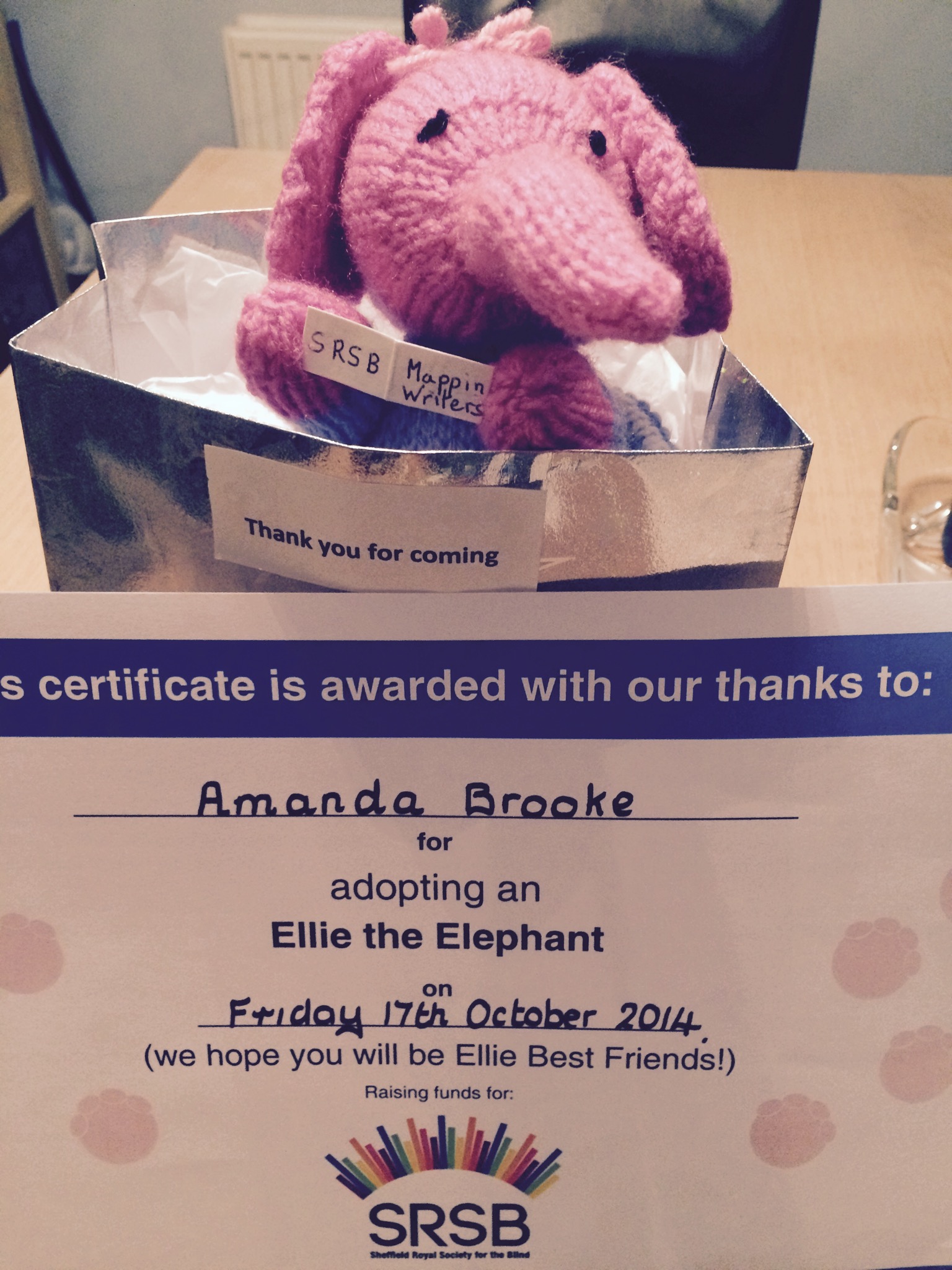
Thank you to Sue Coggin for inviting me, to my fellow writers who made me feel so welcome and a special thanks to Julie Smith for the amazing poem she gave me. I would also like to thank SRSB for the flowers and the elephant – which I have now adopted and have a certificate to prove it. I think I’ve made some lovely friends in Sheffield and will have to go back there soon.

SRSB Elephant

Read ‘Me’

I love reading and I especially love that sense of anticipation and uncertainty when I start a new book and especially when it’s by a new author. Am I going to like the story? Are the characters going to be people I will love and admire, disagree with or even hate? What kind of world do they live in? How are they going to react as the story unfolds and would I do the same?

The more I’m drawn into a book, the more I become immersed in this other world which isn’t just constructed from the author’s imagination, because I just have to throw in my own embelishments. The way I visualise and interpret the story will be heavily influenced by my own experiences, values and perceptions.

But it was only recently while I was going through the latest rewrite of Leaving Me that I began to appreciate just how intimately an author’s experiences can be woven into the novel too. It can’t all be make-believe!

I have to admit that when I’m writing, I’ll sometimes make a conscious decision to include a little bit of me in my books. In Yesterday’s Sun and Another Way to Fall, there were certainly emotions that I could only have expressed because I identified so closely with them, but there have been more subtle elements added to my novels too. The painting Holly draws in Yesterday’s Sun, for example, was one of mine; the memory about one sister saving her Easter eggs to tease the other in Another Way to Fall was my memory too; and Maggie’s aromatherapy business in Where I Found You was fuelled by a hobby I once enjoyed. And then of course there’s the park bench which has a starring role in Where I Found You, it’s my bench, the one I can clearly remember sitting down on when I was contemplating being a mother for the very first time. If you want to find out more about that, you can read my blog on the Waterstones site [click here].

But it was only when I was rereading the draft manuscript for Leaving Me that I realised how much of me I’d put into it unconsciously.  Certainly some things I’ve used have been exaggerated and redefined but there are others that are a little too close for comfort. What they might be, I don’t think I need reveal just yet, if at all. Leaving Me will be out in Spring 2015 so I think I’ll wait until then to decide.

So now that I’m aware of this additional ingredient that I’ve put in my books, I’m starting to wonder if other author’s do the same and to what degree. And if they are there, could I spot them? I think I’d better pick up another book and see if I can… Any excuse to read!


A Token of My Appreciation

Dear Reader,

In the run up to the publication of my latest novel, it occurred to me that while I spend endless hours writing for you, I’ve never actually written to you. So I apologise now because this letter is way overdue.

I’ve been wondering for a while if you realise how important you are to me; you, the reader who invests your time and money into reading one of my books.  I say one book but if you then went on to read more of my work, then (wow!), thank you so, so much! Believe me, that’s just about the biggest complement you can give an author, to pick up another book and take another chance.  I hope I haven’t let you down.

Thank you for helping me get Where I Found You published.

Thank you for helping me get Where I Found You published.

It’s hard to imagine you reading the words I’ve spent hours agonising over, adding to the text, cutting scenes, tweaking the personalities of my characters and what motivates them and generally squeezing every ounce of emotion out of the story and the author. Do you laugh when I want you to laugh or, more likely with one of my books, do you cry when I want you to cry?  Are you sorry when the story comes to an end and for that matter, is the ending you think the story deserved?

It’s those kind of questions that are spinning around in my head when publication day arrives and my novel is released into the world. The problem is that I don’t get to see the effect my writing has on you, I’m not an actor on stage who can hear your gasps or peals of laughter.  What I rely on is the reviews from the amazing army of book bloggers out there and from individual readers who also leave reviews or post comments on my website or Facebook page, not to mention the occasional tweet.  I wonder if you realise how precious that kind of feedback is to me.  Did you know the comments you leave can make my day or, if it’s bad, make my heart sink?

Of course if you asked my publisher, then the most important feedback would be the sales figures which in turn drive the rankings and I can’t lie to you, that’s important to me too.  And it’s not just your direct contribution to those figures that I appreciate. Let’s not forget the new readers you’ve sent my way through your blogs, reviews and the personal recommendations to your friends. Even if they borrowed your copy, there’s always the chance they then went on to buy my next novel.  It all mounts up and it all contributes to my continued existence on the bookseller’s shelves.

It’s a harsh world out there in the publishing industry and I thank you all for your amazing support in getting me this far. I hope it’s the beginning of a long and beautiful relationship but even if my publishing adventure were to end and my stories were left languishing on my computer then perhaps that was meant to be. But for now, thank you for making my dream of becoming a published author a reality.  Thank you, thank you, THANK YOU!

With much love,

Amanda Brooke

Digital vs Paper – An Author’s Perspective

This week sees the publication of my second novella, ‘If I Should Go,’ which will be quickly followed by my next novel, ‘Where I Found You,’ out on 5th June 2014. There are some obvious differences between the two; the covers for one and the small detail of the novella being a mere 27k words compared to a hefty 111k in the novel. But there is for me a far more notable difference, namely, If I Should Go will only published as an ebook whereas Where I Found You will have both a physical and digital presence.

If I Should Go

Published 8th May 2014

And as the author, I have a very different emotional connection to each of them. The writing process may be very similar; write, rewrite, edit (repeat as necessary) but once I had completed the novella, I didn’t get that sense of crossing a finish line, not even when the cover design was finalised. There was no specific moment where I could sit back, relax and congratulate myself for all the hard work I’d put into its creation and in spite of the fact that If I Should Go is a story I’ve enjoyed writing and can’t wait to share, there’s still a disconnect with my e-book. It’s a little like seeing the baby scan and not being able to hold the baby.

Where I Found You was another matter entirely. The initial stages of writing were the same, albeit much longer and at times more agonising but unlike the novella it would take a physical form as I discovered last week when a padded envelope dropped on my doormat. I ripped it open excitedly to touch my beloved novel for the very first time. It was real, it was tangible and it was so much worth the effort. What’s more, it’s there now sitting pretty on my bookshelf where I can admire it from afar or pick it up and yes, I will admit to this, smell it.

Where I Found You

Published 5th June 2014

I am of course talking from an emotional rather than commercial point of view. I love the fact that my books are available digitally for as long as people want to read them but I would hate to see a day where the need for paper copies is completely dispensed with and thankfully there’s still a firm body of support for traditional printing to protect us from that possibility for some time yet…but maybe not forever.

Digital versus paper is a subject that divides friends, families and generations and the subject cropped up at a book club I attended at Mersey Travel in Liverpool last week. There were strong advocates who extolled the virtues of Kindles and the like. They’re easily transportable and even more so now that many of us use Smartphones for our literary fixes.  They’re great for downloading samples or taking on holiday, you can adjust the font so you don’t have to reach for your reading glasses and for the avid reader, you don’t have to worry about shelf space.

The traditional booklover’s response was at times far more emotive but there were practical considerations too. A traditional book doesn’t lose battery power and you can flick to a favourite passage on the page far easier than you can on a screen. The cover design lodges in your memory when it sits there on your bedside table and the book becomes an intimate friend with whom you can while away the hours.

It was clear from the discussion that a reader’s relationship with a paper novel was akin to a love affair as opposed to a more casual, functional relationship with an ebook. At least we were all agreed on one thing; books in any form are a great way to escape into a world made from equal measures of the author’s and the reader’s imaginations.

A World of My Own Making (and a cover reveal too!)

Deciding where to locate a story is a big decision for any author and one I tend to give a lot of thought to. After all, I know that for months to come I’ll be spending much of my waking hours there – if not during my sleep too. Should I set my novel somewhere new and face the challenge (or pleasure) of going off on a research trip? Should I stay a little closer to home and base the story in my hometown or favourite haunt? Or could I create a fictional world where only my characters will ever inhabit?

I’ve dabbled with all three options to some extent. Yesterday’s Sun was set in a fictional village, Another Way to Fall in my home town and once in a while I’ve written about places I’ve had to visit before I could include them in a particular scene. But when it came to writing my third novel, Where I Found You, I really had no choice at all. By the time I got around to committing the story to paper, I already had a very clear image of that opening scene in my head. I imagined a traditional Victorian park with a main avenue slicing it in two. It had a bandstand and playing fields, and there was a lake snuggled away from view where my main character, Maggie could sit quietly and let the world go by. I knew every intricate detail of that first scene, right down to the layers of paint on her favourite park bench but that was the problem. The bench, the lake and the layout of the park existed only in my mind and when a lengthy internet search failed to uncover a park that matched my expectations, I had no choice but to create a town called Sedgefield, nestled in the Cheshire countryside with a busy high street and of course the perfect park where my heroine could blossom. By the time I finished writing Where I Found You, I was sorry to say goodbye to the town I had created.

So naturally, I went back there.

I’ve just finished a novella called If I Should Go which will be out as an e-book next month. Not only is it set in Sedgefield, but my central character had already made a cameo appearance in Where I Found You (although if you blink, you’ll miss her!). And because the novella will be released a month before the novel, readers will get the opportunity to have a sneaky glimpse of the town of my imaginings. It was a first for me to write two stories that are ever so slightly interlinked and it was a joy. Like I said, the town was intimately familiar to me and writing the novella felt like coming home.

If I Should Go is about a young woman called Rachel who is a single mum and making ends meet by working in a care home and living at home with her mum. She has a second chance of happiness or at least that’s how she sees it when Martin offers her a new life. Writing it was about exploring what happiness means to different people. It’s not only about the sacrifices that we might contemplate taking but also how little we sometimes appreciate what we already have. The novella is out on 8th May 2014 and I really hope you enjoy reading it as much as I enjoyed writing it.

And don’t forget to look out for Where I Found You which is out on 5th June 2014!

If I Should Go

Novella


The Cathartic Writer

The premise behind my second novel Another Way to Fall was for the heroine, Emma to be able to write the life she would have led if her illness hadn’t stolen it from her.  It wasn’t difficult for me to imagine how writing that lost life might have been cathartic for Emma, in fact it’s what I love about writing myself; it was that kind of catharsis that spurred me to write both Another Way to Fall and Yesterday’s Sun.

It’s easy to see how the confines of the page can provide a certain sense of security that enables and emboldens the writer to share their innermost feelings.  And while both of my novels were clearly for public consumption, the characters I’ve created are sometimes speaking my words and thinking my thoughts.  Maybe the readers can see through that false veil or perhaps they are able to take some of those feelings as their own for one reason or another.

But not everything I’ve written has been fiction or with the sole purpose of getting published.  I turned to writing when my son was ill, at a time when I couldn’t articulate my feelings in any other way.  To put it simply I couldn’t physically talk about what was happening but I could write about it.  I didn’t chose writing as a therapy but rather it chose me.  Having never had any aspirations to be a writer, when I started to keep a journal I was less interested in the prose than the message I was trying to convey or the memory I was trying to capture.  And two years later when my son died, I was determined to write his story.  It ought to have been tortuous to relive some of the horrors he endured and I witnessed but I somehow survived the retelling of it.

I can’t say how writing Nathan’s story helped but I don’t doubt that it did. As a bereaved parent it gave me the reassurance that while I had lost my son and knew that time would steal the sound of his voice, the scent of him and the touch of him, I would forever hold onto those intimate details of his life even after they inevitably faded from my mind.

The intimate details of Nathan’s life are there to be relived if ever I need to but in truth, up until recently I chose not to, and even when I did open it the other day it was only a quick glance.  I had been planning to write a blog about a park bench in preparation for my next novel Where I Found You which is being released in June 2014.  It was a bench in Sefton Park that I had in mind which held memories of me sitting there heavily pregnant with my daughter.  Then I just happened to be in Calderstones Park the other week and passed a play area with another bench which evoked another memory.  This one was not so pleasant and it made me finally open up the journal and read the entry about the day I took by two children to the park in a failed attempt to feel like a normal family.

If ever I needed proof that writing can be cathartic then it was that entry in my journal.  All those feelings of anger, futility and sadness are there in the words I had written, there on the page and not eating away at me.  I can’t claim that writing Nathan’s story has purged my soul of all the pain and grief but it has certainly lessened the burden.  I suspect my reluctance to read it over is that fear of all those feelings returning but there are some treasures in there too, the good memories and the reasons why my son is my inspiration.  But then I don’t think I’m ever likely to forget that.

A Cosy Chat

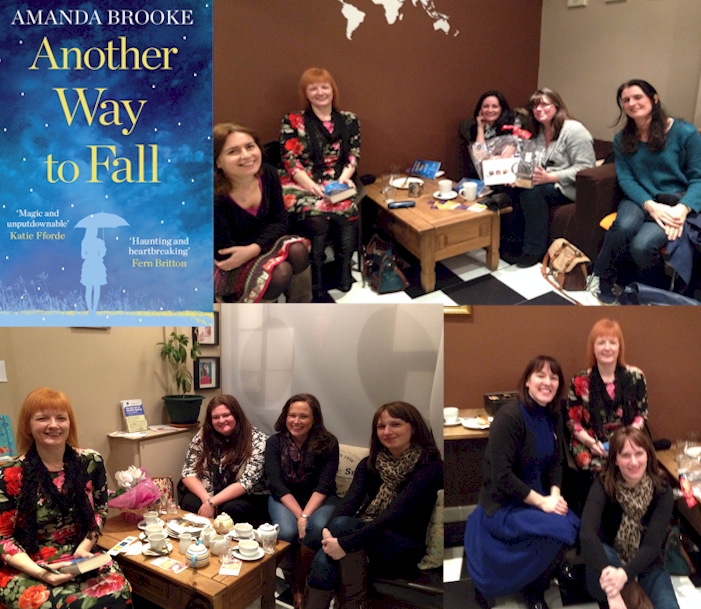
I was lucky enough to be invited to a book club this week at the Cosy Bean Coffee Shop in Garston, Liverpool and I had such a great time!  It was lovely chatting to everyone about Another Way to Fall and even though there were, as I suspected, lots of tough questions, it really got me thinking about my book and particularly my heroine Emma.  I think everyone loved her as much as I do.

Amanda Brooke and Cosy Bean Book Club

Book Club

The evening went by so fast and really had me thinking about what I’d written.  It had been so difficult to willingly create a character who had cancer and then go on to dare to write as if I could know what it was really like – even with my own personal experiences.  Thankfully I’ve had lots of positive, dare I say, amazing responses and reviews and I’m so glad that even though I may have made quite a few people cry, the overwhelming response to Another Way to Fall is that Emma’s story was inspirational rather than heartrending.

One of the most interesting questions posed at the book club was about the Shopkeeper.  Who was he??  I had to admit that when I wrote that particular character it was my deliberate intention not to explain who he was or what he might represent in Emma’s mind.  Was he a religious or spiritual representation or did he embody something far more physical, another character in the book or perhaps the power at her fingertips?  For me, he provided a way in which Emma could redress the balance in her life.  She had suffered enough, sacrificed enough, she deserved to get to ‘the good bit,’ and what the Shopkeeper could offer was a life that was fair.  But that’s just my view and I love that every reader will see him slightly differently – and the best answer by far on the night was that the Shopkeeper was really Emma’s laptop.  Genius!

I’d like to say a big thank you to Nicola Gill who runs the Cosy Bean and organised the event which raised an amazing £220 for Cancer Research UK.  Thank you to all the book club members who made me so welcome and I hope to be invited back again one day soon!

PS. I still haven’t worked out what the appropriate response is when someone says how much I made them cry… thank you just doesn’t seem quite right!?

In Times of Trouble

There’s nothing like a storm to make us all realise how vulnerable we are to the forces of nature and appreciate the things and more importantly, the people in our lives.  Not that I have any great tale to tell; Liverpool has got off relatively lightly so far but I did make a trip to London and was caught up in the travel chaos just before Christmas.  And it was that trip that got me thinking.

I arrived at Euston in time to catch the four o’clock train only to hear an announcement that there had been a power failure and all trains had been suspended.  I was tired and I not only wanted to get home, I wanted to be home!  An hour later there was another announcement, the signals were still down but two trains were being allowed to leave.  One was to Manchester which wasn’t where I needed to be but it was close enough.  I joined the stampede and was fortunate enough to get a seat.  Still wondering how on earth I was going to get from Manchester to Runcorn to pick up my car and with no direct connecting train, I had a text from my sister.  She said she would come and pick me up.  I could have cried, not because I was even going to consider letting her making the 100 mile round trip on a stormy night but simply because I knew that she was there for me if I needed her.

I arrived home at ten o’clock after another train and taxi ride, tired but immensely relieved and yet my sister’s text played on my mind.  It had made me realise how lucky I am to have two brothers and a sister in my life.  There’s a saying about not being able to choose your family but they’re the ones we all turn to in a crisis.  Okay, sometimes we drift and lose touch with some relations but the relationships we have with our siblings are probably the ones we will take to the grave.

And there lies the problem.  I couldn’t help wondering who would be there for my daughter.  When my son was born, she was seven years old and I was comforted to know that she would grow up with a brother who was going to be at the front of the queue vetting her boyfriends no matter what the age difference.  Nathan would be eleven now and the impact of his loss must include that gaping hole in her life.  My daughter is an only child again and I don’t know who she would turn to on a stormy night when I’m too old to come to her rescue.  With any luck there will be a partner or spouse (yes, this post could have been quite different if I wasn’t single), and if not then cousins or maybe close friends but in this day and age are any of those relationships as resilient as the connection between siblings?

It made me stop and think about how I develop family structures in my writing.  In my first book, Yesterday’s Sun, Holly was an only child but in Another Way to Fall, I created a sister for Emma.  Obviously as the author I had the freedom to choose the supporting cast for my characters.  Holly needed a strong sense of independence to be able to her take a life and death decision on her own so instinctively I made her an only child.  Emma on the other hand was facing her own mortality and I couldn’t let her do that without a sister by her side.

The point is, the families I created around my heroines complemented the fate I had already chosen for them but real life doesn’t work like that, does it?  For most of us, life isn’t a singular plot but an eclectic mix of trials and tribulations.  There will be times when we will fare better on our own and then other times when we will need someone to turn to for help.  I’m lucky enough to be able to have that choice, my daughter doesn’t, and not only her but a growing proportion of our society.  Families are shrinking and in time there won’t just be fewer brothers and sisters but fewer aunts, uncles and cousins too.  So what will we do to replace that kind of support network?  Will we make more of an effort to stay in touch with distant relatives or perhaps nurture more friendships?  With social media it’s certainly feasible but is that enough?  Will those virtual relationships ever replace hands-on support?  I have no answers, all I can do is be grateful that when I needed support I received an offer of help rather than someone ‘liking’ my status on Facebook or retweeting my sorry tale.

The Work Goes On

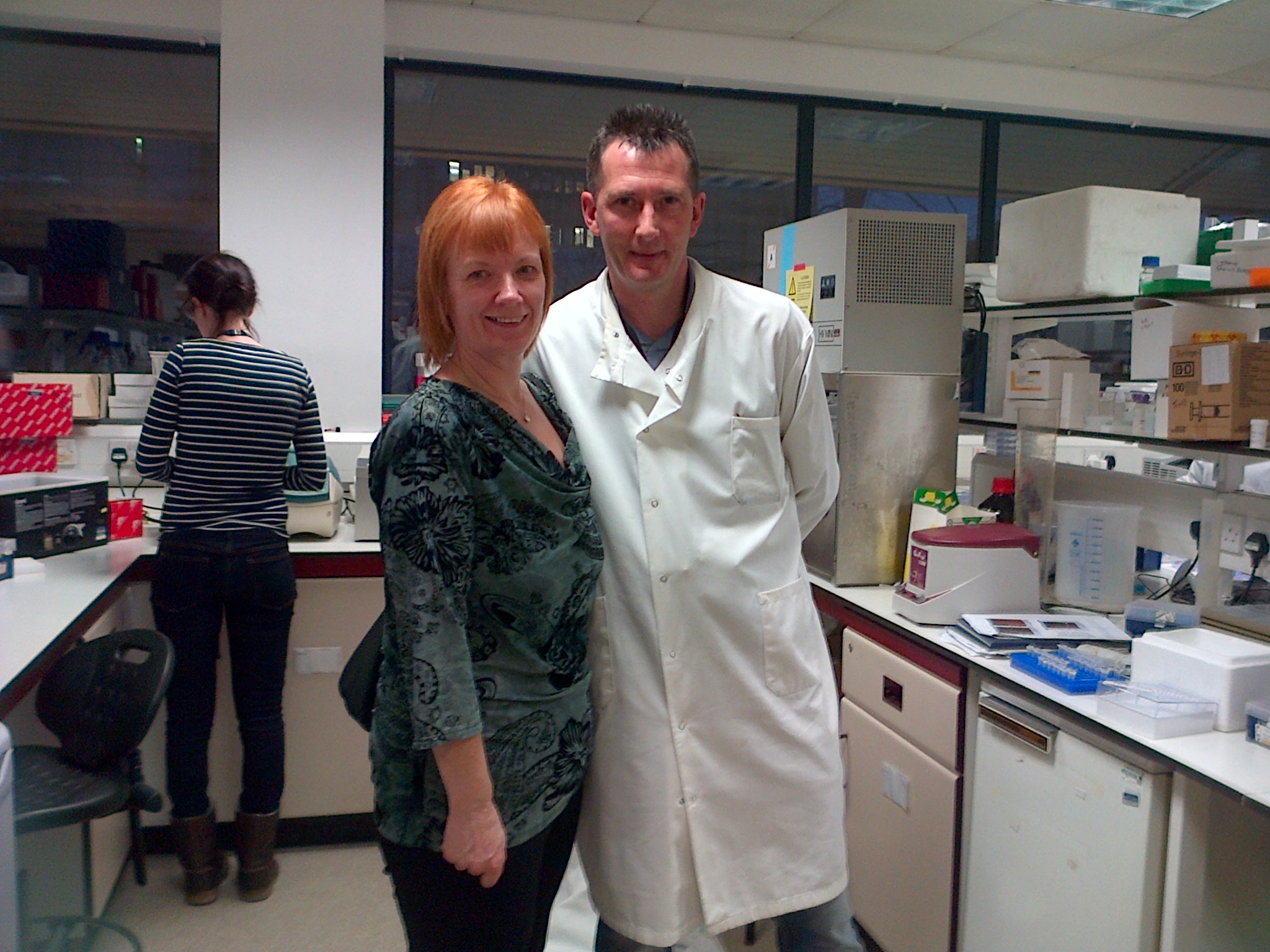
I was lucky enough to be invited along to the Cancer Research UK laboratories in Liverpool recently and I can’t even begin to describe how much of an impact the visit had on me but this blog is my attempt to put those feelings into words.

My son was diagnosed with a rare form of leukaemia when he was twenty one months old and during his treatment, I felt powerless to help him.  For a period of about eighteen months while his cancer remained indolent all I could do was research my son’s disease as much as I could so that I was best placed to be his advocate.  That was over seven years ago and I’ve forgotten much of what I learned but now all of those memories have come flooding back.

An oncologist once told the parents of a little boy that the treatment they were about to embark upon would one day be considered barbaric.  Their child had the same type of leukaemia as my son and eventually Nathan faced an identical course of treatment, only his consultant referred to it as ‘heroic measures.’  It involved pumping three different types of chemo into his small body over a matter of days to stop his bone marrow from producing cancerous blood cells, quickly followed by a bone marrow transplant.  And when my son was at his lowest, it also involved withdrawing anti-rejection drugs so the new cells would fight Nathan’s own cells and kill off any residual cancer.  The life-saving treatment was so intensive that it was also life-threatening.  It was a lot to ask of a three year old and in Nathan’s case, too much and he died a month after the transplant.

Talking to the staff at the labs, I realised just how much there is still to do, not only in the search for a cure but in the treatment protocols that patients of all ages must endure if they are to stand any chance of getting that all important ‘all clear.’   Yes, cancer treatment has come on in leaps and bounds but with more people developing cancer than ever, now is not the time to take our eye off the ball.

CRUK

Cancer Research Lab -Liverpool

Since I lost my dad to cancer some twenty years ago, I’ve always supported cancer charities. I’ve completed nine Race for Life events with my daughter for Cancer Research UK and I ran the London Marathon for the Children with Cancer charity.  But until now, I never stopped to think how the funds raised might be used.   Other than coming across the occasional awareness campaign or reports on the latest statistics or break-throughs, the work undertaken by cancer research charities isn’t particularly visible or obvious.  In the labs, I was able to see some of that research first hand. There were stacks of Petri dishes containing live tumour cells and experiments to see what effect different drugs had on the cancer, the aim being that when those drugs are used, patients are given enough to do the most damage to the faulty cells and the least damage to the healthy ones.  I saw that kind of balancing act when Nathan was being treated, treatment which was based on the best knowledge at the time but which caused horrendous side-effects that are simply too painful to describe.  I have to believe that one day there will be a better way.

What heartened me most about my visit to the Cancer Research UK labs was hearing how much collaboration goes on behind the scenes.  It’s not just about individual organisations working to serve their own interests but a joint approach with other cancer charities, the pharmaceutical companies, the universities and the doctors, all working together for one common cause – to beat a disease that is likely touch everybody’s life in one way or another.

Cancer is on the increase and where I live in Liverpool, in the North West, statistically I’m more at risk.  We all know how to reduce those risks (quit smoking, drink less, eat healthily, exercise, avoid sunbeds and sunburn and generally be aware of the subtle changes in our bodies to spot the early signs) but we can’t eliminate those risks completely – if a three year old child can get cancer then none of us are immune.

What happened to my family was the single most traumatic experience of my life and it continues to affect me.  I became a writer to make sense of what happened and writing my second book Another Way to Fall placed me back amongst the kind of devastation that cancer can bring.  The novel is brimming with strong and inspirational characters who would much prefer to lead ordinary lives.  The same was true of my family.  I didn’t want my life to change, I didn’t want my son to have to be that strong.  I would rather Nathan’s treatment had been a little less barbaric and that he hadn’t been called upon to be so heroic.  The truth is, I would rather he was still here and while I have no choice but to accept that can’t happen, I can still pray that the next child won’t have to be so heroic.  It’s a hope, and one that’s kept alive by the amazing work of the scientists, doctors and fundraisers that I’m dedicating this blog to.

Thank you to Emma Squibb and Jamie Wilson for giving me such a thought-provoking tour.